Skip to content
OxfordGarage Door ServicesOpen 24/7 (226) 796-9195
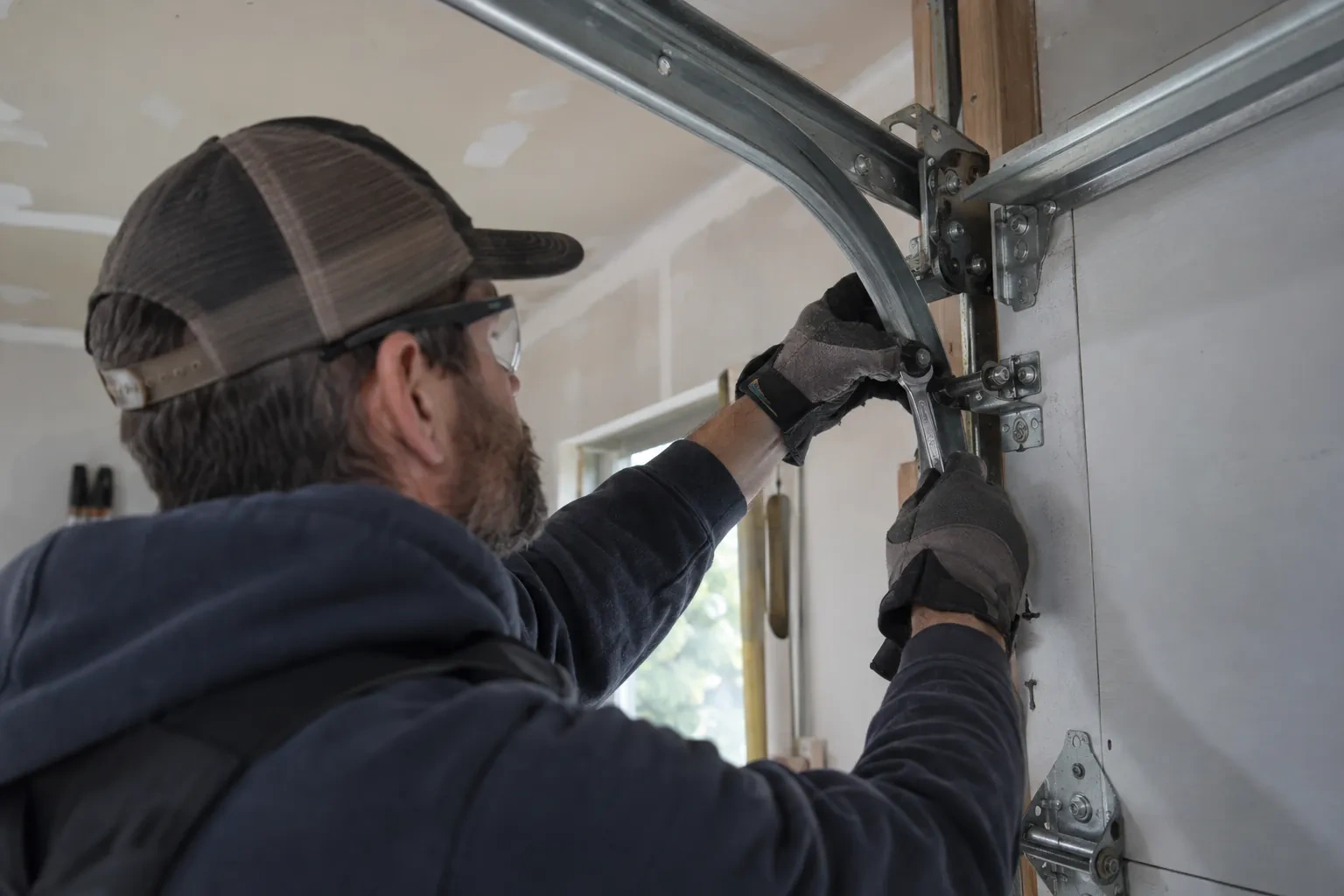
Technician in a mesh cap and safety glasses holding a wrench to a bracket at the bend of the metal door track. — South-West Oxford

Openers · South-West Oxford

Emergency Release Repair

It is the coldest morning of the year. A week of slush and road salt has crusted over the outside release lock, the key will not seat, and the opener inside is silent after the overnight outage.

In plain words

The release only earns its keep on a door that behaves once it is free of the opener, so the visit starts with the door closed and a balance test rather than with the handle. Disconnected, a healthy door lifts with modest effort, holds around a metre off the floor and stays put at the top. That is the door the release is designed for. If the door is heavy, drifts down or shoots up, the springs need attention first, work done with winding bars by a technician trained for tensioned hardware. Once the door passes, the release work goes ahead and the system is proven together.

Sound familiar?South-West Oxford

The call
After a week of lifting the door by hand you pressed the button, hoping it would catch. Instead the motor grinds, the trolley thumps against the end of the rail, and the little lever that should snap back stays stubbornly upright.
NextHow the visit goes

Emergency Release Repair · South-West Oxford

How the visit goes

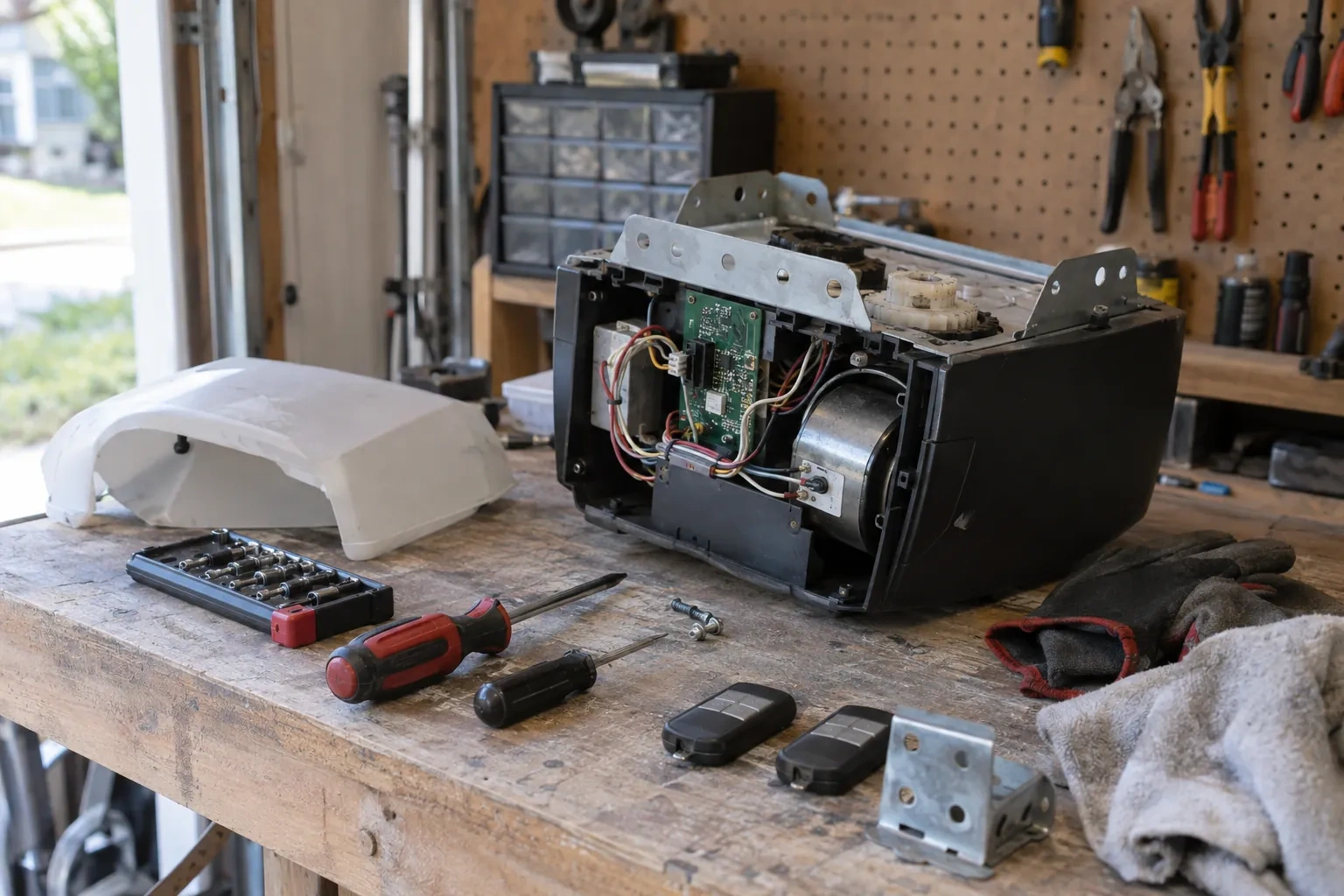
Opened garage-door opener motor with a green circuit board on a workbench beside its white cover, two remotes and screwdrivers. — South-West Oxford
  1. Scene 1

    How the door behaves on its own

    The release is then pulled with the door closed and the door is lifted by hand, using the door's own handle or a gripping point clear of the section joints. This is the balance test, and it decides the order of the work. A door that rises with modest effort, holds at about a metre and stays fully open is ready for release work. A door that feels heavy, sinks back or springs upward is telling the technician that the counterbalance needs attention first, and the release is left disconnected until that is done. Manufacturers and the industry checklist both put this test ahead of any further use of the release.

  2. Scene 2

    Fitting or repairing the outside key release

    For a garage with no other way in, an outside release is fitted or repaired. A hole is cut for the cylinder where the kit and door call for it, the top section on a sectional door or mid-height on others, the lock is mounted with its plate, and a cable is run from the back of the cylinder to the release lever on the trolley, clear of the section joints and the top bracket as the door bends into the track. The cable is set with slack enough that turning the key and pulling the cylinder throws the lever fully. A seized cylinder is replaced, a stretched cable re-set or renewed, and two keys are handed over.

  3. Scene 3

    A monthly minute of checking

    The industry advice is to look over the door and opener about once a month, and the release fits into that habit. With the door closed, pull the handle and raise the door by hand to about halfway to feel that it moves freely and holds where you leave it; then lower it and reconnect. Follow with the reversal checks: the door should back off a length of 2x4 laid flat on the floor and reverse when something passes through the sensor beam. If the door ever feels heavier than it did today, or the trolley stops clicking home, that is the moment to call rather than to keep using it.

In the van

  • Chain or belt tension hardware
  • Door arm, clevis pins and clips
  • Trolley and carriage assembly
  • Garage door lubricant
  • Release lever and spring

What shapes the quoteOxford Garage Door Services

Outside key release: repair or new
Renewing a cylinder, cable or keys on an existing outside release is one line; cutting the door and fitting a complete kit where none exists is another, and both are named separately.
Opener type and rail
A chain or belt unit on a one-piece rail, a sectional square rail, a screw drive and a wall-mounted opener each use a different release part, and the part sets the shape of the job.
Extra keys and a lockbox
Two keys come with an outside release. Additional keys cut for family members, or a small lockbox for the spare, are small add-ons listed as separate lines.

FeesSame any hour

Have it ready

Before you call · 0 / 3

(226) 796-9195

Your questions, answered

How long does an emergency release repair take?

A cord and handle, a lever spring or a trolley freed from the stop bolt is a modest part of an hour, including the balance test and reversal tests. Replacing a trolley or fitting an outside key release takes longer, since the drive is slackened and re-tensioned or a hole is cut in the door. If the balance test finds the springs need work first, that is a separate piece of the visit, and you are told before it starts.

How high should the release handle hang?

No more than about 1.8 metres above the floor, so an adult standing on the slab can reach it, and high enough to clear the roof of the car parked beneath it. It should also be plainly visible and red. If a new door or a rail change left the cord short, or a previous owner tied it up around the rail, the technician cuts a fresh rope to the right length and moves any obstruction out of the way.

What exactly is the emergency release on a garage door opener?

It is the manual disconnect between the opener and the door: a red handle on a cord below the rail, connected to a lever on the trolley. Pull it and the trolley lets go of the door so you can move the door by hand, for instance during a power outage. Push the lever back, or run the opener, and the two reconnect. It is required on residential openers, coloured red so it stands out from everything else overhead.

South-West Oxfordinformation

OxfordOntario

Town
South-West Oxford, Oxford
In business
27 years
Hours
Open 24/7
Nights, weekends and holidays, same fees
Visits
On-site assessment preferred. Request a visit or call.

2021 census: what it means at the door

Every square is one home in a hundred.

  • 68 in 100 homes · older homes
  • About 68% of homes in South-West Oxford were built in 1980 or earlier, according to the 2021 Census.Where houses are older, the garage often sits beside the house rather than beneath a bedroom, so noise is a smaller concern and durability a larger one. Heavy-duty rollers, a properly sized torsion spring and cold-rated lubricant make an old door dependable for years.
  • Single-detached houses make up about 95% of homes in South-West Oxford (2021 Census).Households in detached homes often have several remotes, a keypad and a phone app between family members and their cars. We keep all of them programmed to the opener, replace the ones that have failed, and explain how to add a new one when a car changes hands.

Source: Statistics Canada, Census Profile

Open South-West Oxford in Google Maps

On-site assessment

Request a visit.

It is the coldest morning of the year.

(226) 796-9195, open 24/7.