Sound familiar?Woodstock
- The call
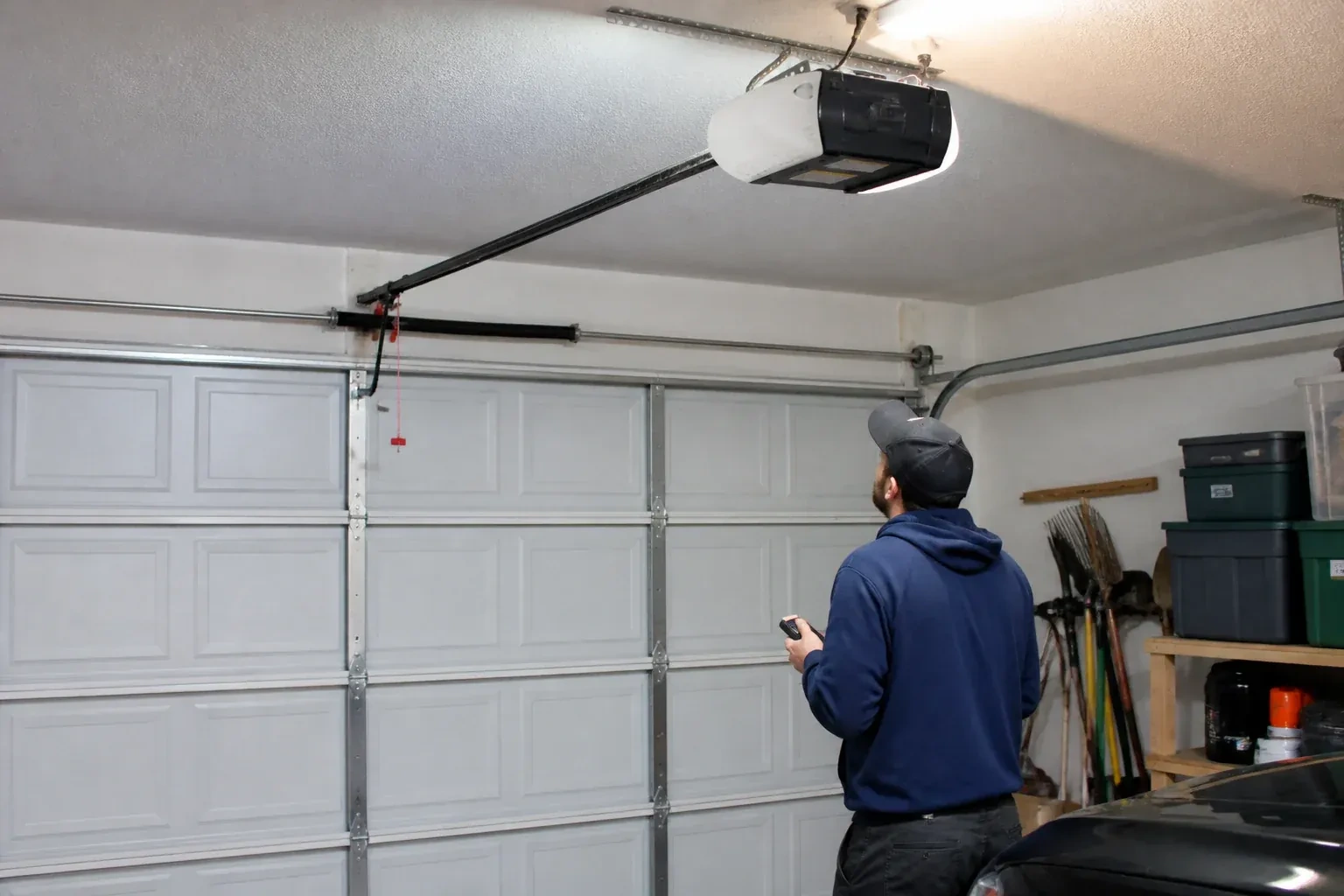
- The door used to glide up with a soft hum. Now there is a sharp clack every second or so, and if you stand underneath you can see the belt sagging below the rail and slapping it on the way up.
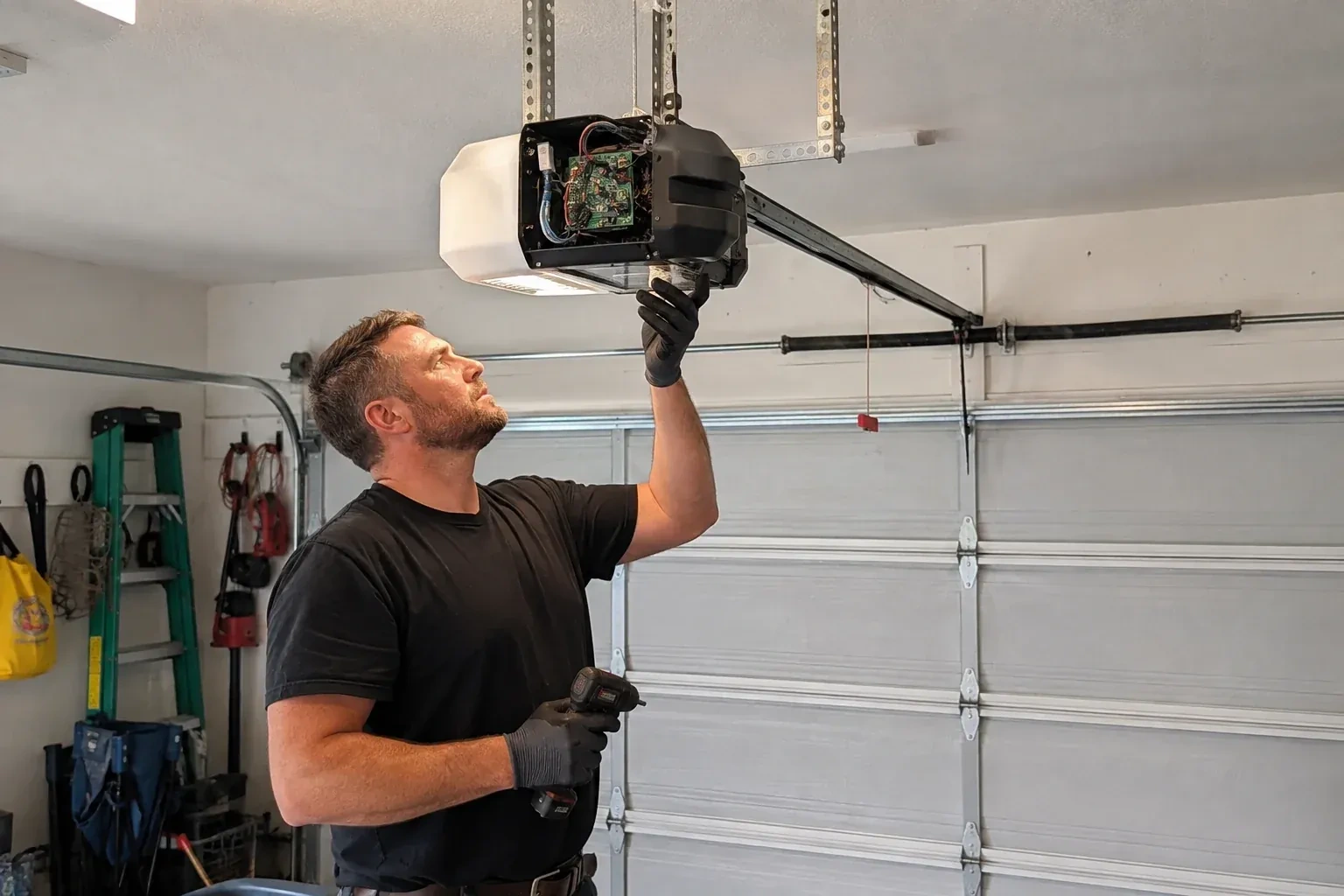
Someone tightened the belt last month to stop the sag. Now the opener sounds like a chain drive, the motor labours on the way up, and the whole rail vibrates under the ceiling.
A stalled belt drive is often a trolley problem, not a belt problem. The trolley rides the rail in two halves: an outer part linked to the door arm and an inner part gripped by the belt. Pulling the red cord parts them so the door can be lifted by hand; running the operator, or a second pull, locks them again. When the release lever sticks, the housing cracks or the halves refuse to re-engage, the motor moves the belt and nothing else. Repair means freeing or replacing the trolley, checking the belt for damage from the drag, and confirming the inner half is in step with the motor.
Sound familiar?Woodstock
Belt-Drive Opener Repair · Woodstock
Scene 1
For a detached or unheated garage the technician asks about the season the trouble started. Rubber stiffens in deep cold, so a belt that runs quietly in June can slap or bind in January, and tension set on a mild day may need a second look at minus twenty. A bottom seal frozen to the slab makes a modern operator reverse before the door has lifted, which looks like a belt fault and is not. Salt tracked in on tires corrodes the bottom brackets and cable ends that the balance test depends on. The belt's tension still follows the opener maker's specified measurement, not a temperature-based setting, though a cold-rated lubricant suits the door hardware in an unheated garage.
Scene 2
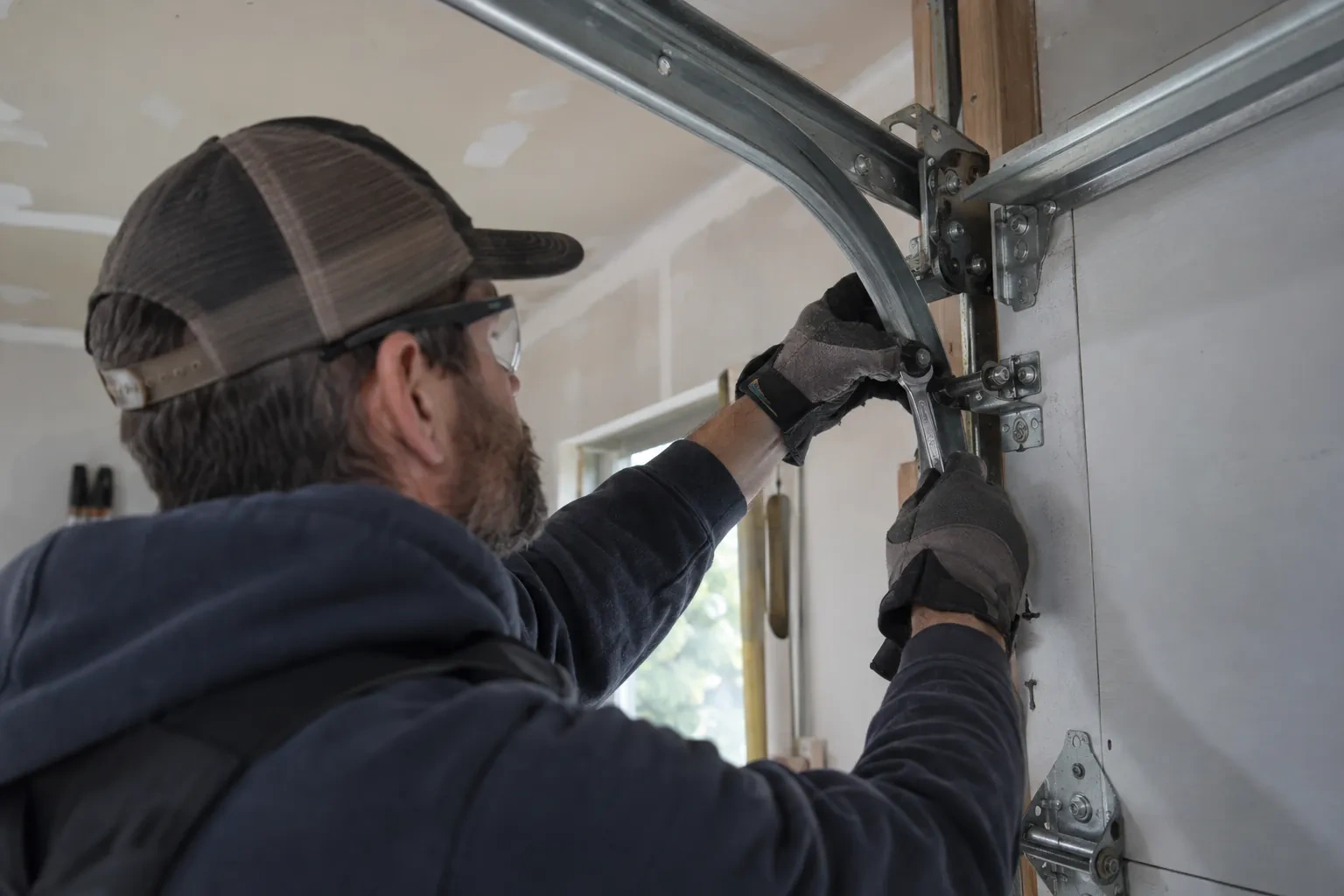
With the drive rebuilt and the door reconnected, the operator is taught its door again. Newer units run a learn cycle that records the full travel and the effort the door needs; older ones have limit screws and force dials set by hand. The close limit is set so the bottom seal meets the floor without the belt straining, and the open limit so the top section stops short of the header. Then the tests: a 2x4 laid flat under the door must send it back up on contact, and an object passed through the photo-eye beam must reverse it while closing. Any hesitation is adjusted and the tests are run again.
Scene 3
Before leaving, the technician writes down the operator's model and serial number, which belt or parts went in, the tension setting used and the date, and hangs the note with the manual near the wall control. You are shown what was replaced and why, and the old parts are yours to keep or are taken away. Keep the note; a belt has a service life measured in years and cycles, and knowing when this one went in tells the next technician where to look. Any settings the operator lost during the work, such as remotes or a keypad code, have been re-taught and tested with you.
What shapes the quoteOxford Garage Door Services
FeesSame any hour
Something between the motor and the door has let go. On a belt drive the usual suspects are a broken clip where the belt joins the trolley, a belt that has jumped off the sprocket or idler pulley, a trolley that failed to re-engage after the red cord was pulled, or a stripped drive gear inside the motor head, which leaves plastic shavings on the housing. Each is a specific repair.
When the belt has been off the sprocket, or the motor has run without it, the motor's idea of where the door is no longer matches where the trolley sits. The door then stops short at one end however the limits are turned. The technician lifts the belt off, runs the sprocket to its closed position, refits the belt with the trolley at the closed end and relearns the limits.
Repair keeps the operator you have and renews the piece of the drive that has failed: the belt, its tension, the trolley, the idler pulley or the gear and sprocket at the motor head. It suits a unit with a sound motor and board, photo eyes near the floor and rolling-code remotes. Replacement is the answer when the operator predates those features or when its board or motor has failed and is no longer made.
OxfordOntario
Belt-Drive Opener Repair · East Zorra-Tavistock, Ingersoll, Norwich, South-West Oxford, Zorra, Bradburn Subdivision, Perrys Lane, Burgessville
Every square is one home in a hundred.
On-site assessment
Someone tightened the belt last month to stop the sag.
(226) 796-9195, open 24/7.
On-site assessment preferred · (226) 796-9195, open 24/7