Skip to content
OxfordGarage Door ServicesOpen 24/7 (226) 796-9195
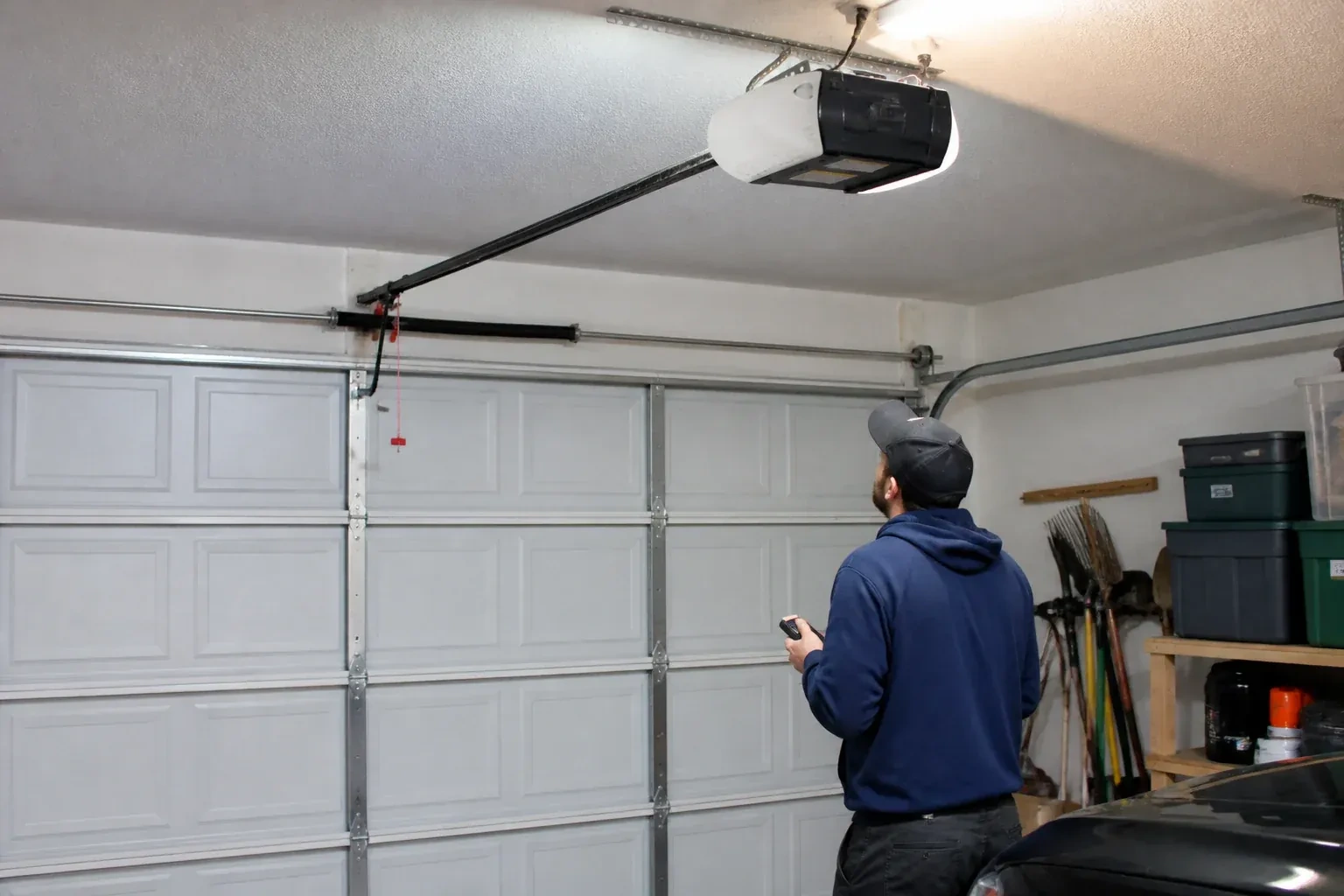
A person holding a remote looks toward an overhead garage-door opener and rail. — Garage Door Opener Diagnosis and Repair, Woodstock

Openers · Woodstock

Garage Door Opener Diagnosis and Repair

Nothing. No light, no click, no hum from the unit on the ceiling.

In plain words

Garage door opener diagnosis is a fault-finding visit with a fixed order of tests. The technician confirms power at the ceiling receptacle, tries each control on its own, checks the safety sensors and their indicator lights, examines the drive train from motor to trolley, and reads any flash code the unit is showing. Only then is a part named, because a dozen different faults look identical from the driveway and guessing at the part costs you a second visit. When the cause is a small component, the repair is made while the technician is there; when it is not, you get a clear account of what comes next.

Sound familiar?Woodstock

The call
For a few days there was a grinding sound whenever the door started moving. Now the motor spins freely and the door stays exactly where it is. On the hood of the car there is a scatter of white plastic shavings that fell from the unit above.
NextHow the visit goes

Garage Door Opener Diagnosis and Repair · Woodstock

How the visit goes

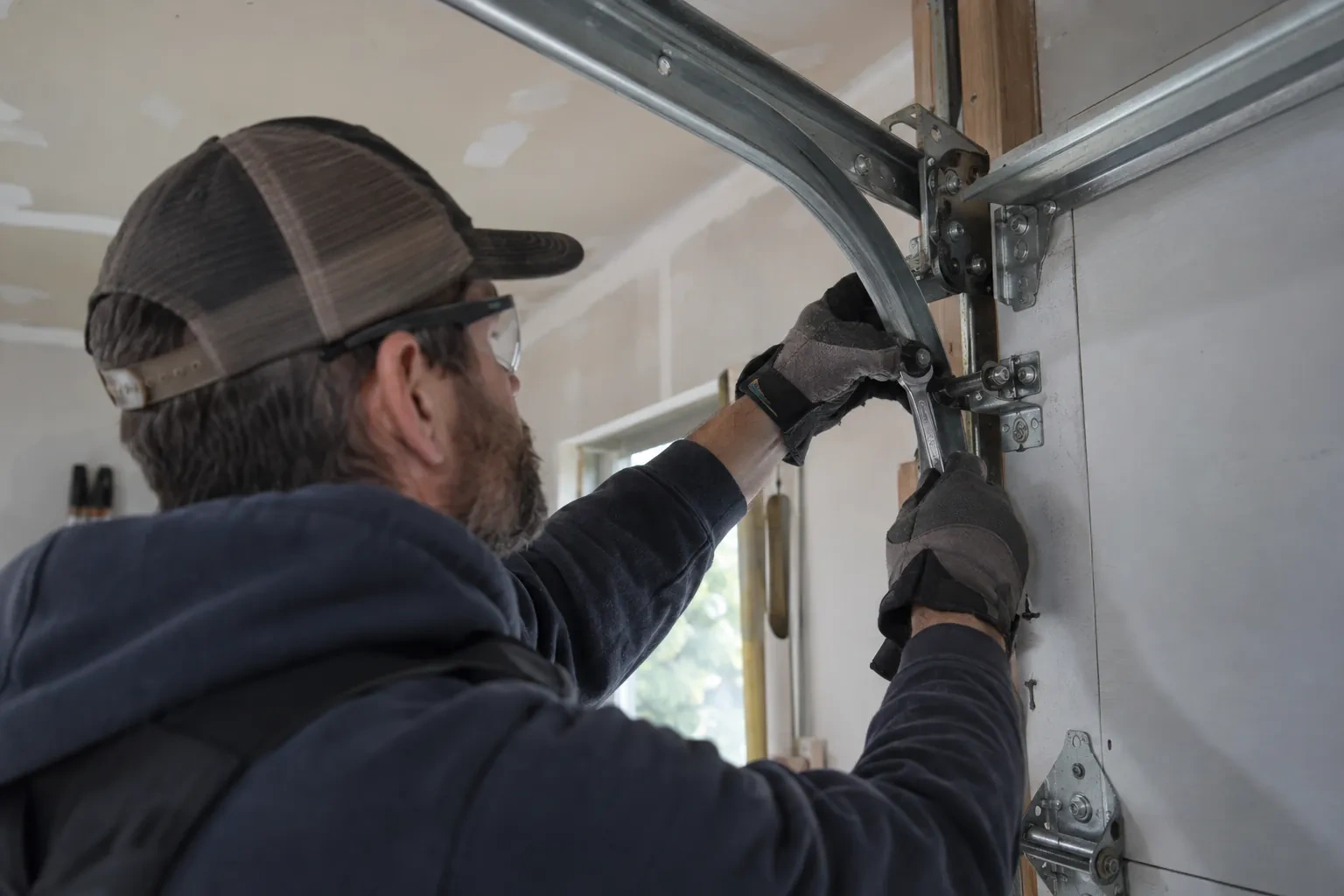
Technician in a mesh cap and safety glasses holding a wrench to a bracket at the bend of the metal door track.
  1. Scene 1

    The two small eyes near the floor

    The photo-eye sensors are inspected together with their wiring. Each sensor carries a small indicator; a steady light on both means the beam is aligned, while a flicker, a dark light or one that goes out when the bracket is nudged points to misalignment, a loose mount or a damaged wire. The technician sights along the beam, looks for obstructions, cobwebs, frost and low sun on the receiving lens, checks that the sensors sit no higher than about fifteen centimetres off the floor, and traces the wire back to the head unit for staples, kinks and chew marks. Sensor faults are the single commonest reason a door refuses to close.

  2. Scene 2

    Capacitor and motor work

    On an AC opener that hums and clicks but never turns, the start capacitor is the first suspect. It is discharged, tested and replaced with one of the same rating, a routine job that returns a dead-sounding opener to normal in many cases. If the motor still fails to turn with a good capacitor, the technician checks for a seized shaft, burnt windings or a failed thermal cut-out, and confirms the motor is not simply being stalled by a locked or bound door. A motor replacement is weighed against the age of the unit and the availability of the part, and that judgement is explained before any decision.

  3. Scene 3

    A door that answers every control

    Before the technician leaves, the door is run from each control you own: the wall console, each remote, the keypad and any phone connection. You watch it open fully, close to a gentle seal and stop in the right places. The opener light and indicator are explained so you know what normal looks like, and any code that appeared during the diagnosis is shown cleared. You also see the reversal tests done in front of you, so you know the door will back off a 2x4 and stop for a beam interruption. Watching the system pass gives you confidence that the repair addressed the real cause.

In the van

  • Travel limit switch or RPM sensor
  • Garage door lubricant
  • Chain or belt
  • Transformer and board fuse
  • Bell wire and clips

What shapes the quoteOxford Garage Door Services

Connected features
A unit with a network module, door-position sensor or hub may need its pairing restored or a module replaced, which is quoted as its own step alongside the mechanical repair.
Distance to your door
Travel is part of the visit. An address across town and a rural property at the end of a concession road involve different driving, and the quote reflects the trip.
Repair or replacement
When diagnosis points to replacement, the quote changes shape entirely: a new head unit, rail and sensors with installation, plus removal of the old opener, rather than a single part and labour.

FeesSame any hour

Have it ready

Before you call · 0 / 3

(226) 796-9195

Your questions, answered

Why will the door close only while I hold the wall button?

That is a built-in behaviour, not a new fault. When the sensor circuit reports a problem, most openers refuse to close from a remote but allow a constant-pressure close from the wall control, because someone standing there can see the doorway. It is a strong signal that the photo eyes or their wiring need attention, and once the sensor issue is corrected the door closes normally from every control again.

Should I lubricate the chain, the rail or the track?

Rollers, hinges, bearings and springs benefit from a garage door lubricant once or twice a year. The chain, belt or screw-drive rail is a separate question, since each drive type calls for its own product and schedule from the opener's manual rather than one rule for every unit. The track itself should stay clean and dry, because lubricant there collects grit and makes rollers slide instead of turning. The technician can point out the spots on your door at the end of the visit.

How old is too old to repair?

Age alone is not the test; parts and safety are. The technician checks the exact model and part numbers, because even a unit from the last two decades can have a board, sensor or trolley that is no longer made. Where the parts are available, a repair is usually straightforward. Where a key part is discontinued with nothing to replace it, or the unit predates photo eyes, replacement is the sounder choice even for a small fault. The technician tells you which side of that line your unit sits on.

Woodstockinformation

OxfordOntario

Town
Woodstock, Oxford
In business
27 years
Hours
Open 24/7
Nights, weekends and holidays, same fees
Visits
On-site assessment preferred. Request a visit or call.

2021 census: what it means at the door

Every square is one home in a hundred.

  • 50 in 100 homes · older homes
  • About 50% of homes in Woodstock were built in 1980 or earlier, according to the 2021 Census.Wood door frames in an older house settle and swell over the decades, which can leave a door rubbing on one side. Rather than forcing the opener, the technician trues the tracks, adjusts the jamb seals and sets the door so it travels freely again.
  • Single-detached houses make up about 57% of homes in Woodstock (2021 Census).In a neighbourhood with both detached and attached homes, some customers decide alone and others report to a board or property manager. We adapt the visit accordingly, giving a homeowner options at the door and a manager a written summary they can circulate.

Source: Statistics Canada, Census Profile

Open Woodstock in Google Maps

On-site assessment

Request a visit.

Nothing.

(226) 796-9195, open 24/7.