Skip to content
OxfordGarage Door ServicesOpen 24/7 (226) 796-9195
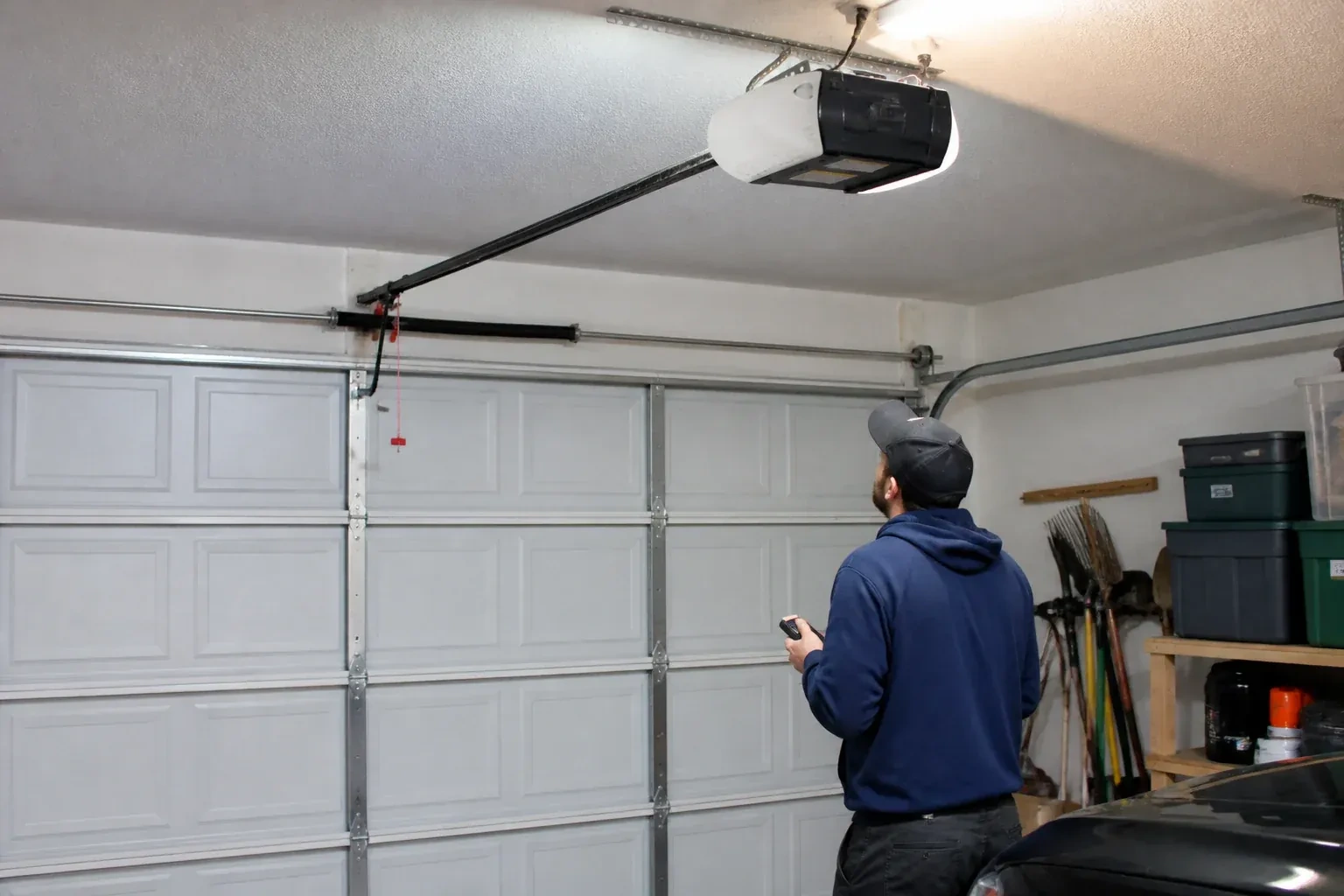
A person holding a remote looks toward an overhead garage-door opener and rail. — Garage Door Opener Diagnosis and Repair, Perrys Lane

Openers · Perrys Lane

Garage Door Opener Diagnosis and Repair

Nothing. No light, no click, no hum from the unit on the ceiling.

In plain words

Winter changes what an opener is asked to do. Grease in the gear case and on the rail thickens in the cold, rollers turn stiffly, and the bottom seal can freeze to the concrete overnight so the door is briefly glued shut. A force setting that was right in July now reads every one of those as an obstruction and stops. A cold-weather diagnosis sorts the seasonal from the structural: freeing the seal, lubricating the moving parts with a product made for low temperatures, checking that the balance is still right, and then confirming the force is low enough to stay safe while high enough to work.

Sound familiar?Perrys Lane

The call
It is a January morning and the door lifts about a hand's width, groans, and settles back down. When you pull the release and try by hand the door feels far heavier than it used to, and the bottom seal is stuck hard to the slab.
NextHow the visit goes

Garage Door Opener Diagnosis and Repair · Perrys Lane

How the visit goes

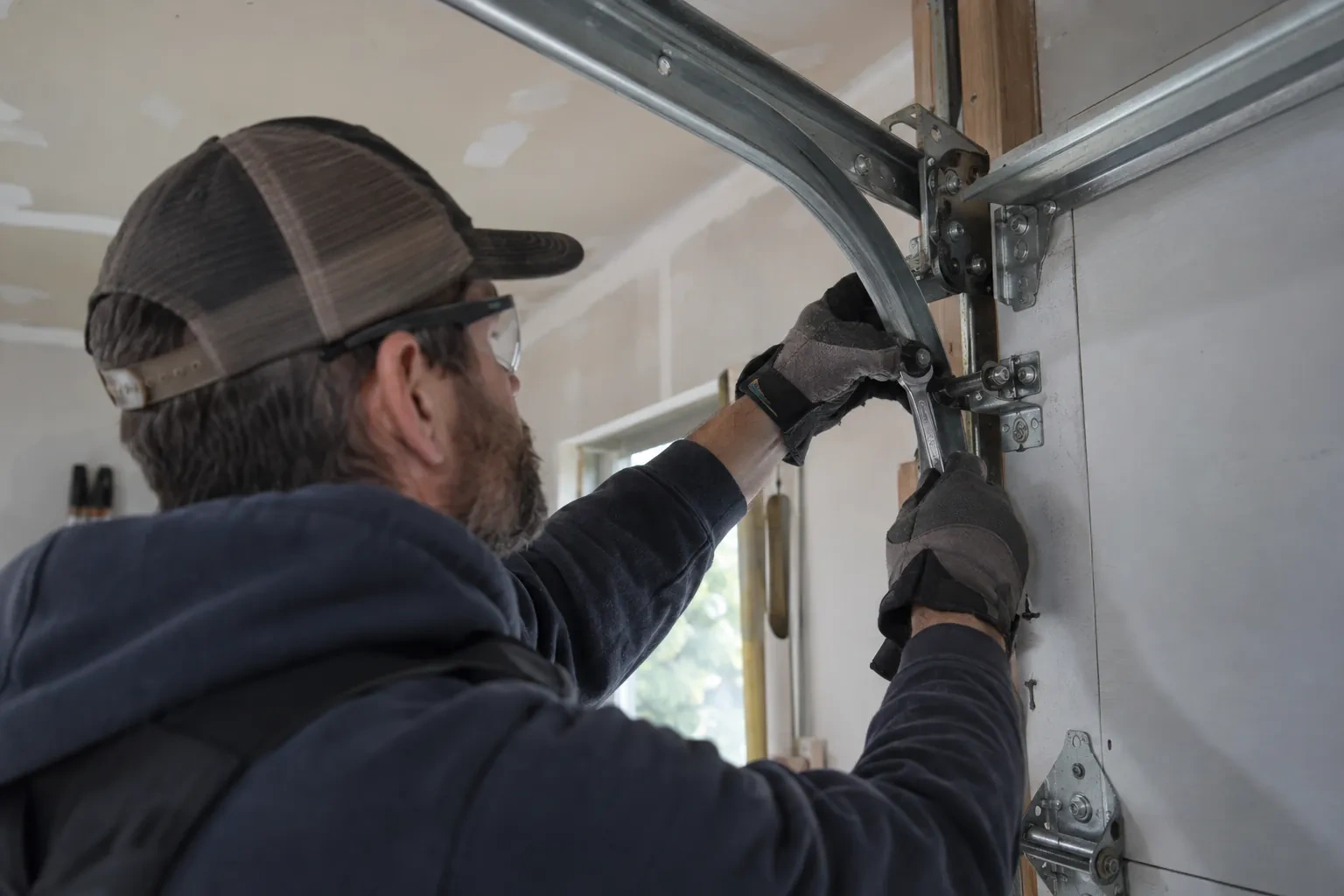
Technician in a mesh cap and safety glasses holding a wrench to a bracket at the bend of the metal door track. — Perrys Lane
  1. Scene 1

    From motor to trolley

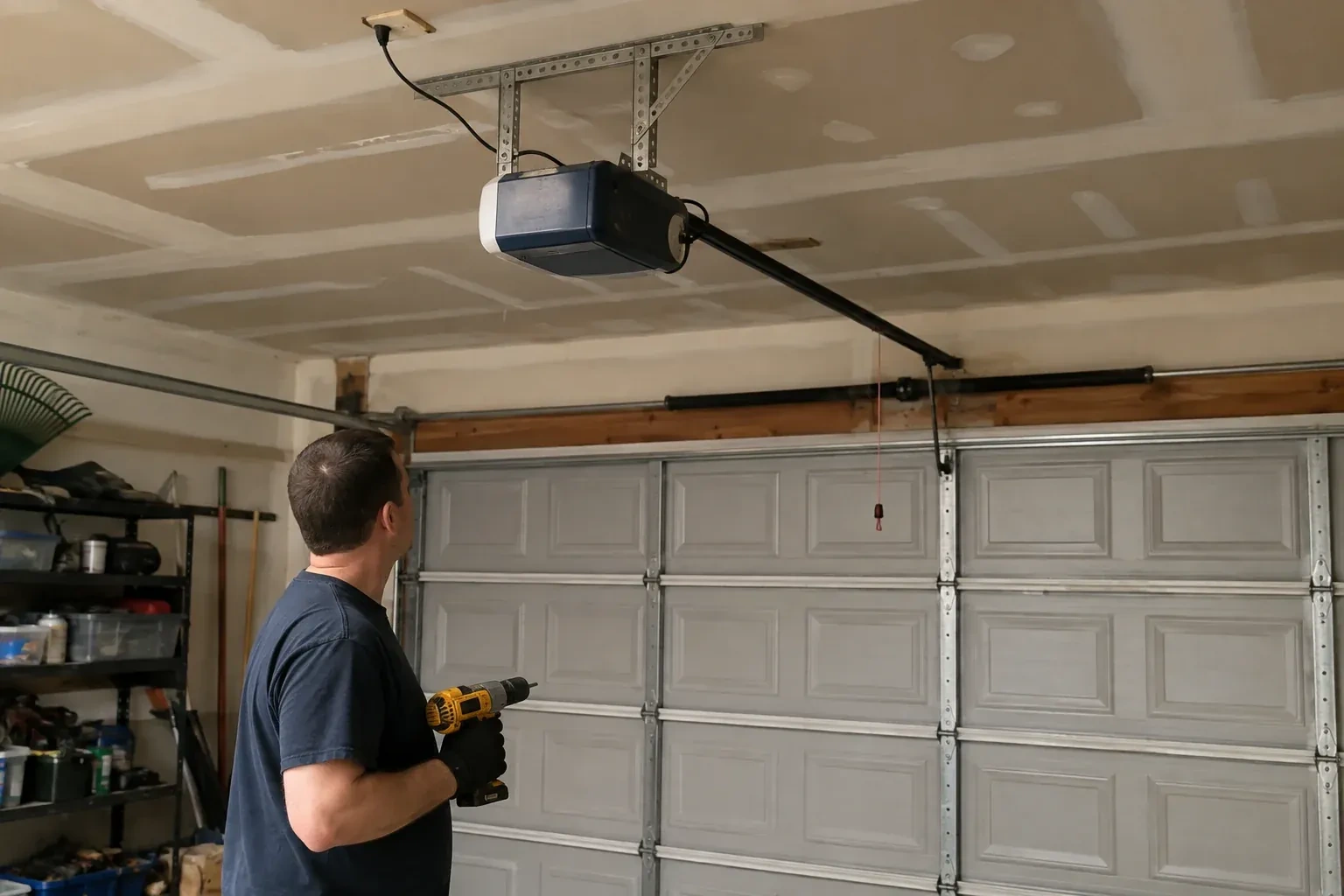
    Behind the cover of the head unit and along the rail sits the drive train: motor, capacitor on AC models, drive gear, sprocket, and then the chain, belt or screw that moves the trolley. The technician listens first, because sounds are specific. A hum with no motion suggests a capacitor or a stripped gear; a motor that runs while the trolley slides alone points to a disengaged carriage or a broken drive; a grinding start followed by silence is a worn gear finishing its life. Then the parts are inspected directly: gear teeth, sprocket, chain tension, belt condition, trolley wear, and the coupling between rail and head.

  2. Scene 2

    Setting travel and force, then proving them

    Once the mechanical cause is dealt with, the opener is set up as if newly installed. Travel is adjusted so the door seals gently on the floor without hammering the slab and stops at the top clear of the header. Force is set as low as will reliably move the door through a full cycle in the current season, never higher. Then the door is closed onto a 2x4 lying flat on the floor and must climb back to open the moment it touches; and while closing again, a broom handle is passed through the beam and the door must stop and rise. Failing either means the setup is redone, not accepted.

  3. Scene 3

    Remotes, codes and who can reach them

    Your controls are left tidy. Every remote is programmed and tested, the keypad code is one you chose, and you know which coin or cylinder cell each device takes. You know what the wall control's lock button does and how to tell when it is on, so a visitor cannot strand you by pressing it. Remotes are kept away from children, and the wall control sits about a metre and a half up, in sight of the door and away from moving parts. If your opener connects to a phone app, that link has been checked and the account is in your name.

In the van

  • Travel limit switch or RPM sensor
  • Garage door lubricant
  • Chain or belt
  • Transformer and board fuse
  • Bell wire and clips

What shapes the quoteOxford Garage Door Services

Sensor realignment versus replacement
Straightening a bracket and cleaning a lens is a small task. Replacing the sensor pair and running new wire along the wall and ceiling is a larger one, and the quote names which applies.
Season and weather
A frozen seal, a stiff door and an unheated garage in the cold months add steps to a diagnosis, such as freeing the door and re-lubricating for low temperatures, and the quote allows for them.
Repair or replacement
When diagnosis points to replacement, the quote changes shape entirely: a new head unit, rail and sensors with installation, plus removal of the old opener, rather than a single part and labour.

FeesSame any hour

Have it ready

Before you call · 0 / 3

(226) 796-9195

Your questions, answered

Why will the door close only while I hold the wall button?

That is a built-in behaviour, not a new fault. When the sensor circuit reports a problem, most openers refuse to close from a remote but allow a constant-pressure close from the wall control, because someone standing there can see the doorway. It is a strong signal that the photo eyes or their wiring need attention, and once the sensor issue is corrected the door closes normally from every control again.

Should I lubricate the chain, the rail or the track?

Rollers, hinges, bearings and springs benefit from a garage door lubricant once or twice a year. The chain, belt or screw-drive rail is a separate question, since each drive type calls for its own product and schedule from the opener's manual rather than one rule for every unit. The track itself should stay clean and dry, because lubricant there collects grit and makes rollers slide instead of turning. The technician can point out the spots on your door at the end of the visit.

How old is too old to repair?

Age alone is not the test; parts and safety are. The technician checks the exact model and part numbers, because even a unit from the last two decades can have a board, sensor or trolley that is no longer made. Where the parts are available, a repair is usually straightforward. Where a key part is discontinued with nothing to replace it, or the unit predates photo eyes, replacement is the sounder choice even for a small fault. The technician tells you which side of that line your unit sits on.

Perrys Laneinformation

OxfordOntario

Town
Perrys Lane, Oxford
In business
27 years
Hours
Open 24/7
Nights, weekends and holidays, same fees
Visits
On-site assessment preferred. Request a visit or call.

2021 census: what it means at the door

Every square is one home in a hundred.

  • 50 in 100 homes · older homes
  • About 50% of homes in Woodstock were built in 1980 or earlier, according to the 2021 Census.Extension springs are common on older doors, and they should carry a safety cable through the middle so a broken spring is held rather than flung. Adding those cables is a small job the technician checks for and offers on any older door he services.
  • Single-detached houses make up about 57% of homes in Woodstock (2021 Census).Where housing is mixed, the doors are mixed as well: wide insulated doubles, narrow singles in rows and the occasional rolling door on a small commercial unit at the corner. Spring type, cable length and opener strength are matched to each door individually.

Source: Statistics Canada, Census Profile

Open Perrys Lane in Google Maps

On-site assessment

Request a visit.

Nothing.

(226) 796-9195, open 24/7.