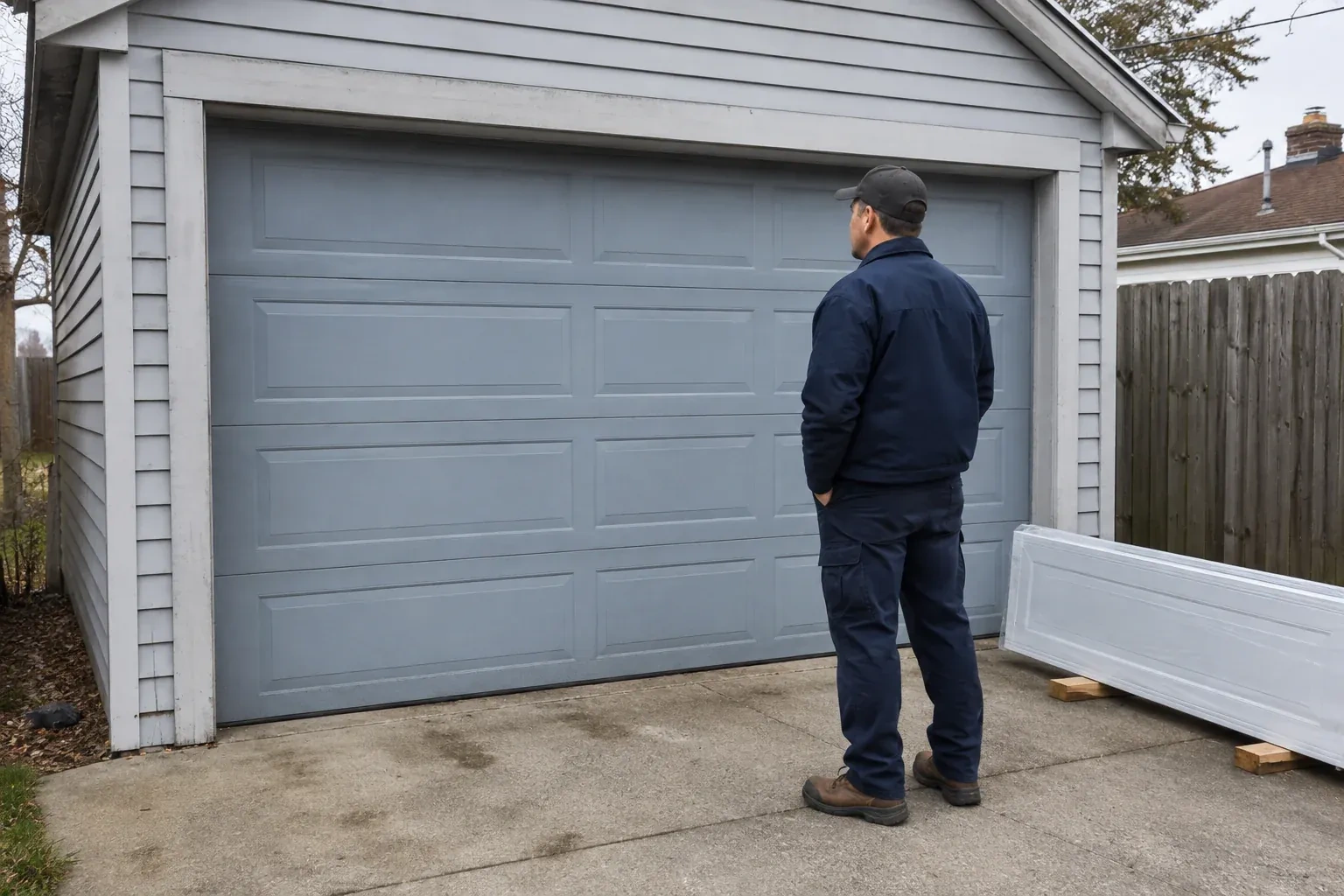
Sound familiar?Woodstock
- The call
- A metallic clatter now comes from inside the hood whenever the curtain coils. The sound follows each revolution, the travel has become jerky, and fine metal dust is visible near one bracket and bearing.
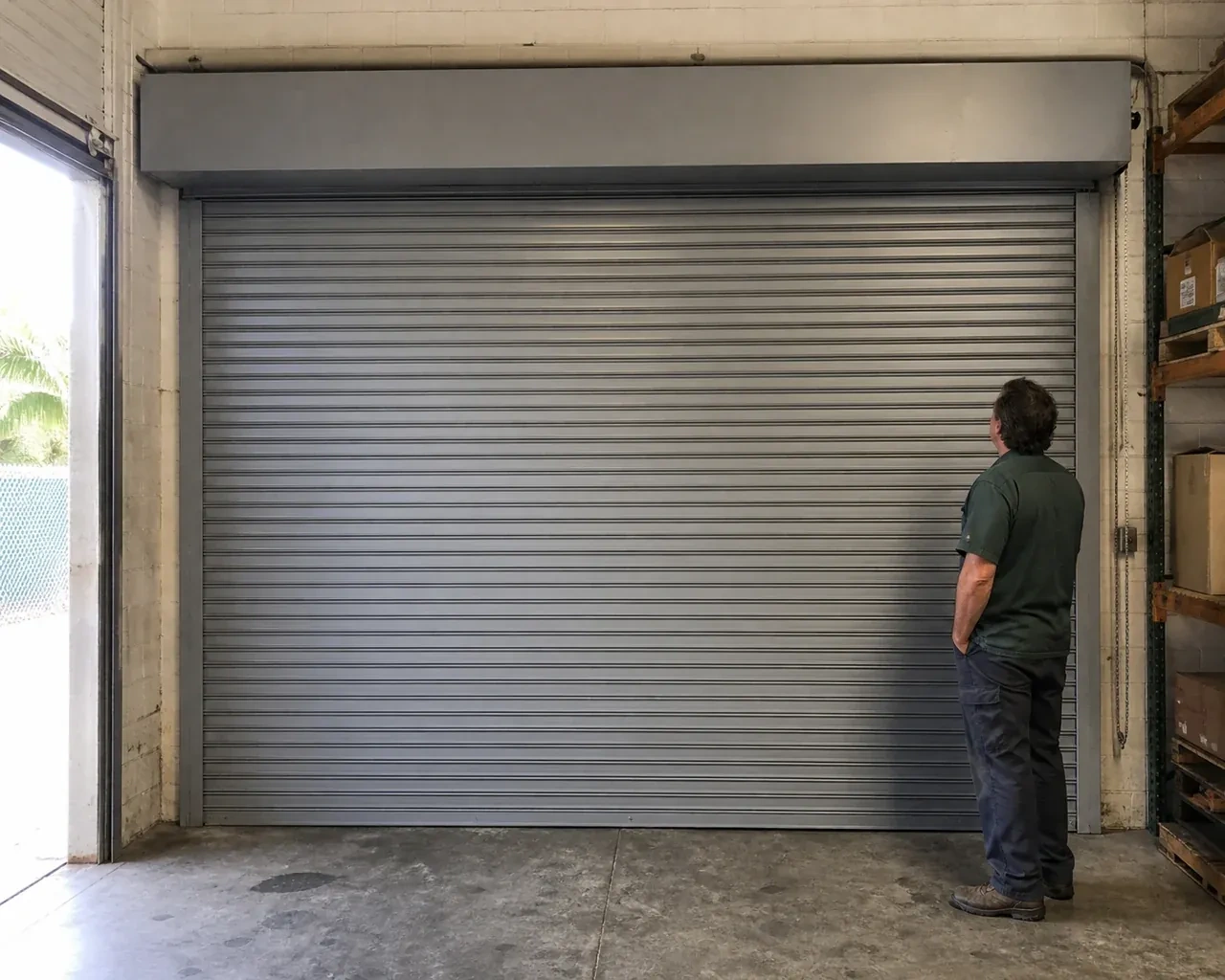
The rolling door starts upward, then one side rises ahead of the other. Its bottom bar sits on an angle, several slats scrape the guide, and the opening is no longer clear enough for normal shipping traffic.
Commercial rolling door repair treats the opening as one connected machine rather than a loose collection of parts. A coiling curtain travels inside guides, wraps around a barrel and is assisted by a spring counterbalance; a hand chain or powered operator supplies movement. The technician identifies that system, controls the work area, secures the curtain and checks how each part affects the others. Bent slats, shifted guides, worn drive parts, balance problems or control faults are corrected within an agreed scope. Controlled cycles then confirm straight travel, proper limits, usable controls and a clear closing path.
Sound familiar?Woodstock
Commercial Rolling Door Repair · Woodstock
Scene 1
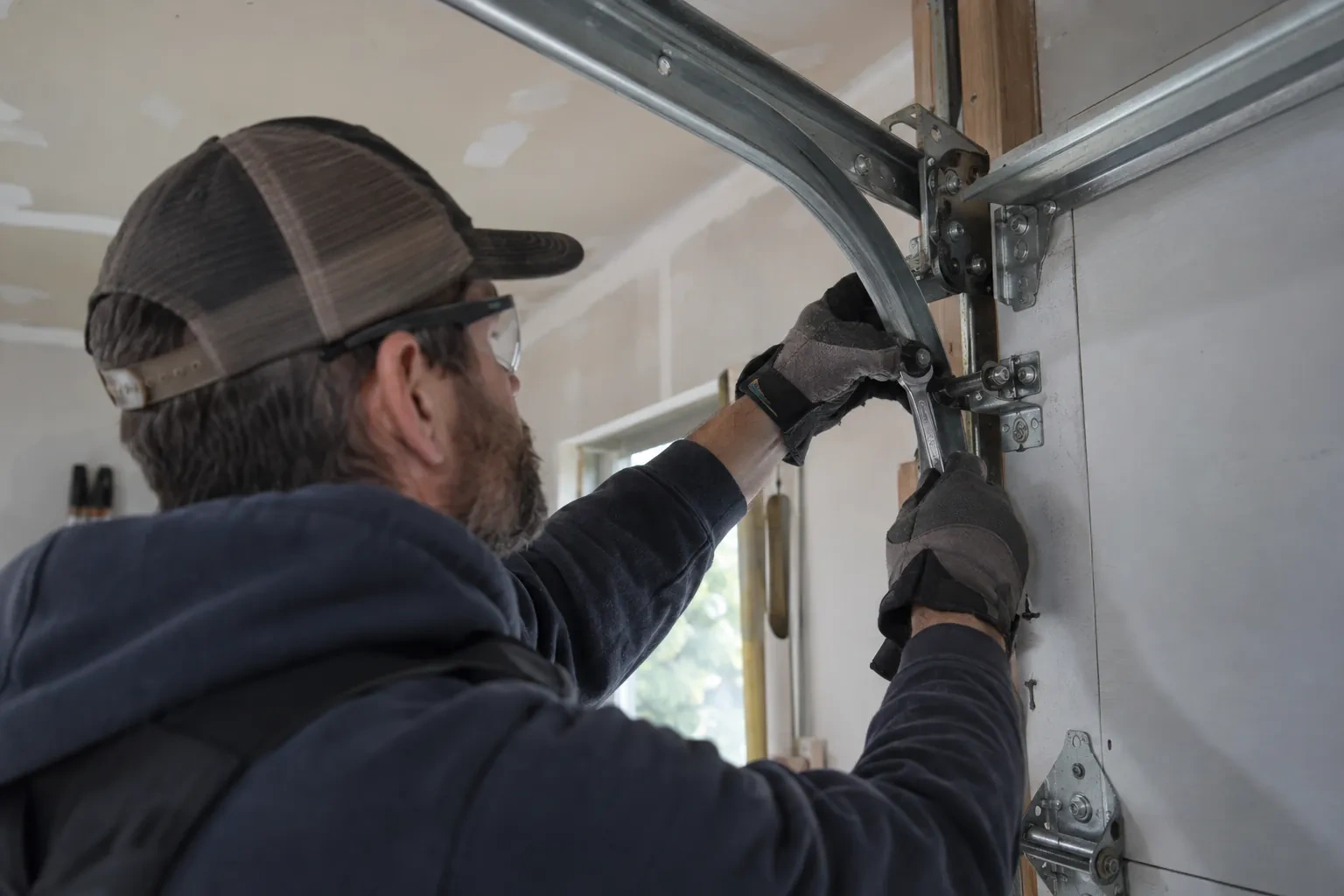
The curtain reveals how the door has been travelling. The bottom bar is checked for level, twist, impact marks and even contact with the sill. Moving upward, the inspection follows interlocking slats or sheet material, endlocks and windlocks for dents, separation, missing fasteners, polished rub marks or sideways shift. At the hood, the technician observes how the material enters the coil and whether it stacks evenly on the barrel. These clues show whether a damaged section can be renewed locally or whether distortion has spread far enough to affect guides, brackets and counterbalance.
Scene 2
The repaired door is returned to service through a measured test sequence. Initial movement is slow and closely observed at the guides, coil, bottom bar, brackets and drive. Several full cycles follow, using the normal control and the manual method where applicable, while the technician listens for repeatable noise and checks stopping positions. Locks, interlocks and protective devices are tested at their proper stage. The handover record identifies parts changed, settings established, functional checks completed and any connected condition assigned to another scope, giving facility staff a practical baseline for future inspections.
Scene 3
A repaired impact area offers useful evidence for prevention. The technician can show where the vehicle contacted the guide, bottom bar or curtain and which travel lane placed it there. Facility managers can respond with visible floor markings, adjusted staging, guide guards or a revised stopping point where those choices suit the site. Operators should report even a light strike because a guide can move before damage looks dramatic. Checking bottom-bar level, guide clearance and fasteners after contact turns a small event into a manageable inspection instead of allowing repeated cycles to spread distortion through the curtain.
What shapes the quoteOxford Garage Door Services
FeesSame any hour
Noise at the head can come from worn barrel bearings, loose brackets, misaligned drive chain or sprockets, shifting slats, an uneven coil or hardware contacting the hood. The pattern matters: once per revolution suggests something different from continuous guide scrape. Controlled observation locates the source before a specific part is selected.
Staff can observe bottom-bar level, new dents or rub marks, guide debris, loose visible fasteners, torn seals, sensor cleanliness, unusual sounds and changes in operating effort. They can keep the sill and doorway clear and record impacts. Spring tension, bracket release and internal repairs remain controlled technician tasks because those areas involve curtain weight and stored energy.
The door may be binding in a guide, held by a lock, poorly balanced, disconnected from part of the drive or affected by a slipping sprocket, chain or key. The operator itself may also have a brake or internal drive fault. Mechanical movement is checked before settings are changed so the motor is not used to overcome resistance.
OxfordOntario
Commercial Rolling Door Repair · East Zorra-Tavistock, Ingersoll, Norwich, South-West Oxford, Zorra, Bradburn Subdivision, Perrys Lane, Burgessville
Every square is one home in a hundred.
On-site assessment
The rolling door starts upward, then one side rises ahead of the other.
(226) 796-9195, open 24/7.
On-site assessment preferred · (226) 796-9195, open 24/7