Sound familiar?Ingersoll
- The call
- On cold mornings the door barely makes it up. The motor whines, the door crawls, and once or twice it has given up halfway. By afternoon, with the sun on the garage, it runs almost normally again.
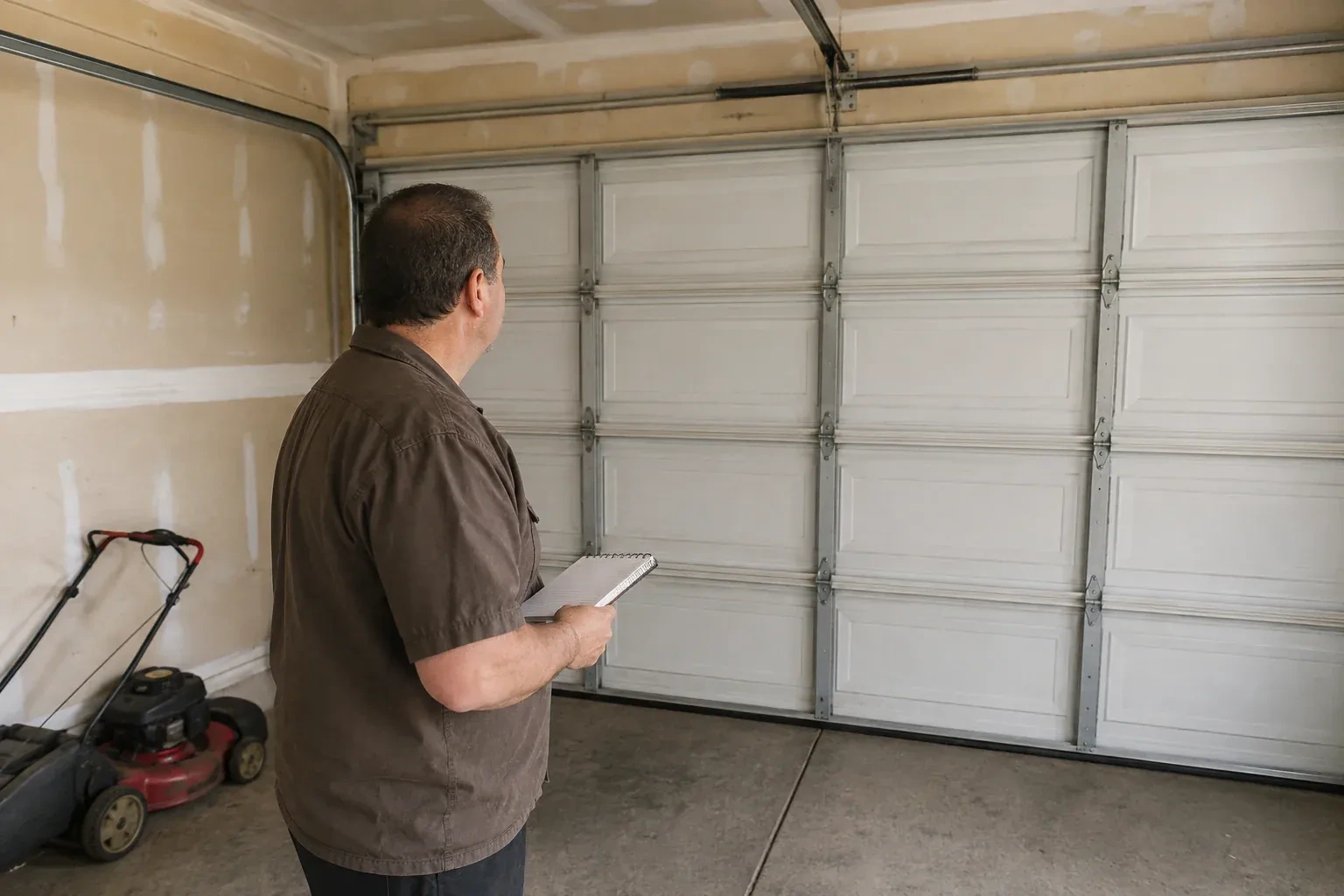
The door has grown heavy so gradually you stopped noticing, until a visitor tried to lift it and could not. The opener still manages, but it sounds strained, the chain slaps on the way up, and the wall button gets pressed twice most mornings.
A balance visit follows a settled order. The technician first checks for a broken spring, displaced cable, binding or track damage; once safe to move, the door is run through a powered cycle, then released to repeat the movement by hand, separating the motor from the door. Springs, cables, drums, rollers, hinges and track are inspected before anything changes. Adjustment comes next, in small steps with a test after each one, until the door holds at every height and sits level. Finally the opener is reconnected, its settings reviewed against the newly balanced door, and the reversing safety tests run while you watch.
Sound familiar?Ingersoll
Garage Door Balance Adjustment · Ingersoll
Scene 1
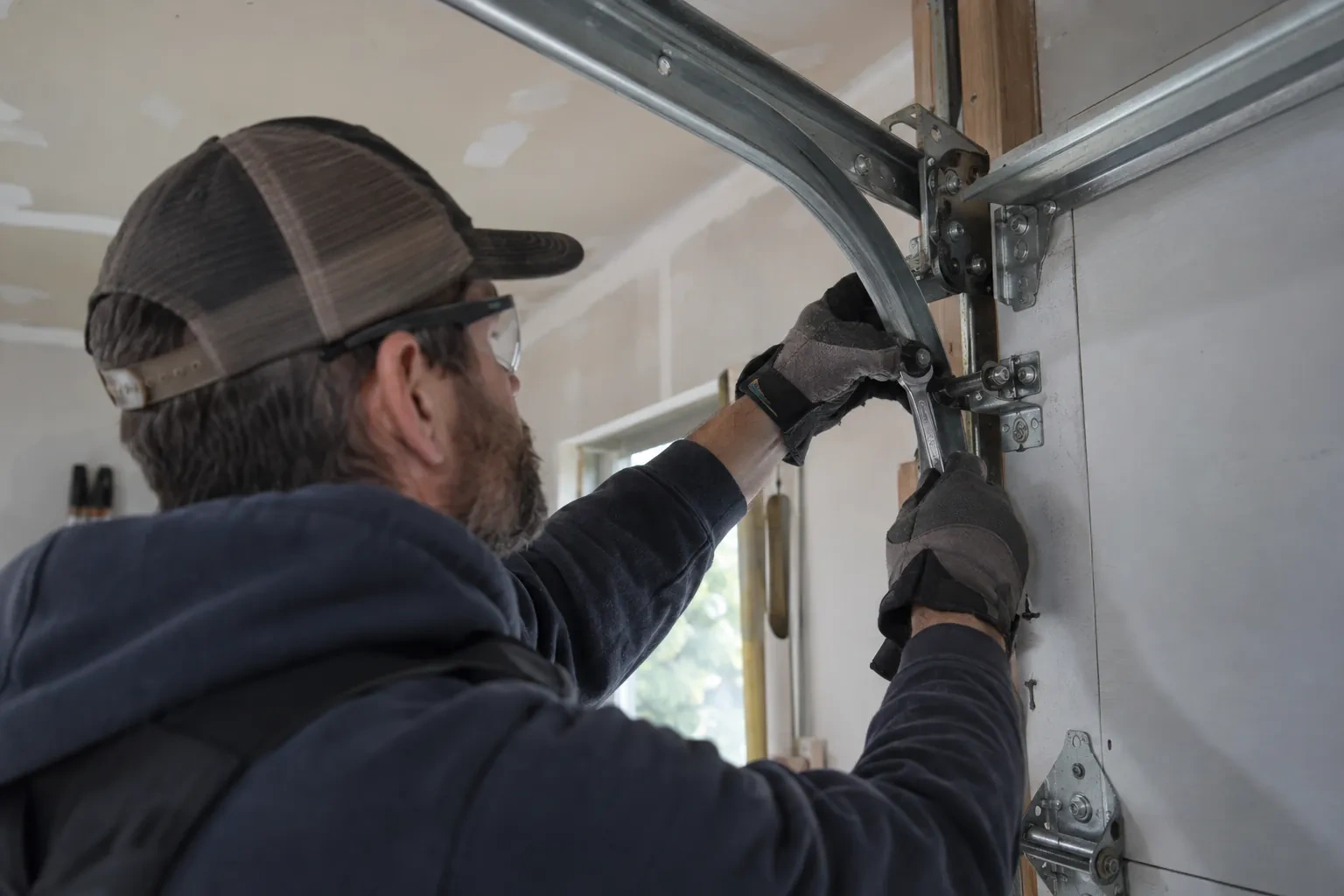
Adjustment only makes sense on a spring that is sound, so each one is examined closely. On a torsion system the technician looks for a gap in the coil, rust pitting, uneven coil spacing and a cone that has slipped on the shaft, and measures the wire size, inside diameter and length to confirm the spring suits the door's weight. On extension springs the check is for stretched or opened coils, a broken end loop and the presence of a containment cable. A spring that has simply lost a little tension can be wound up; one that is undersized or near the end of its cycle life is explained and offered as a replacement instead.
Scene 2
Sometimes the hand test shows that the springs have given what they have to give. A torsion spring wound beyond its design turns loses its remaining life; an extension spring stretched to its last hook is at its limit. When the inspection or the door's weight shows the springs are undersized or near the end of their cycle life, the technician explains this and offers a matched replacement, with new springs specified from the door's weight, height, drum and track. The balance work then continues on the new springs, and the outcome is the same properly balanced door, with the added benefit of a fresh cycle count.
Scene 3
Before leaving, the technician tells you how the door was set: the number of turns on each torsion spring or the hook position on each extension spring, the spring dimensions, the door's measured weight if it was weighed, and any parts that were replaced. Writing this on a card by the opener or inside the manual saves a future technician from starting from scratch, and it gives a reference point if the door ever starts to drift. Springs age gradually, so a note that says the door held at a certain number of turns tells a later visit how far things have moved.
What shapes the quoteOxford Garage Door Services
FeesSame any hour
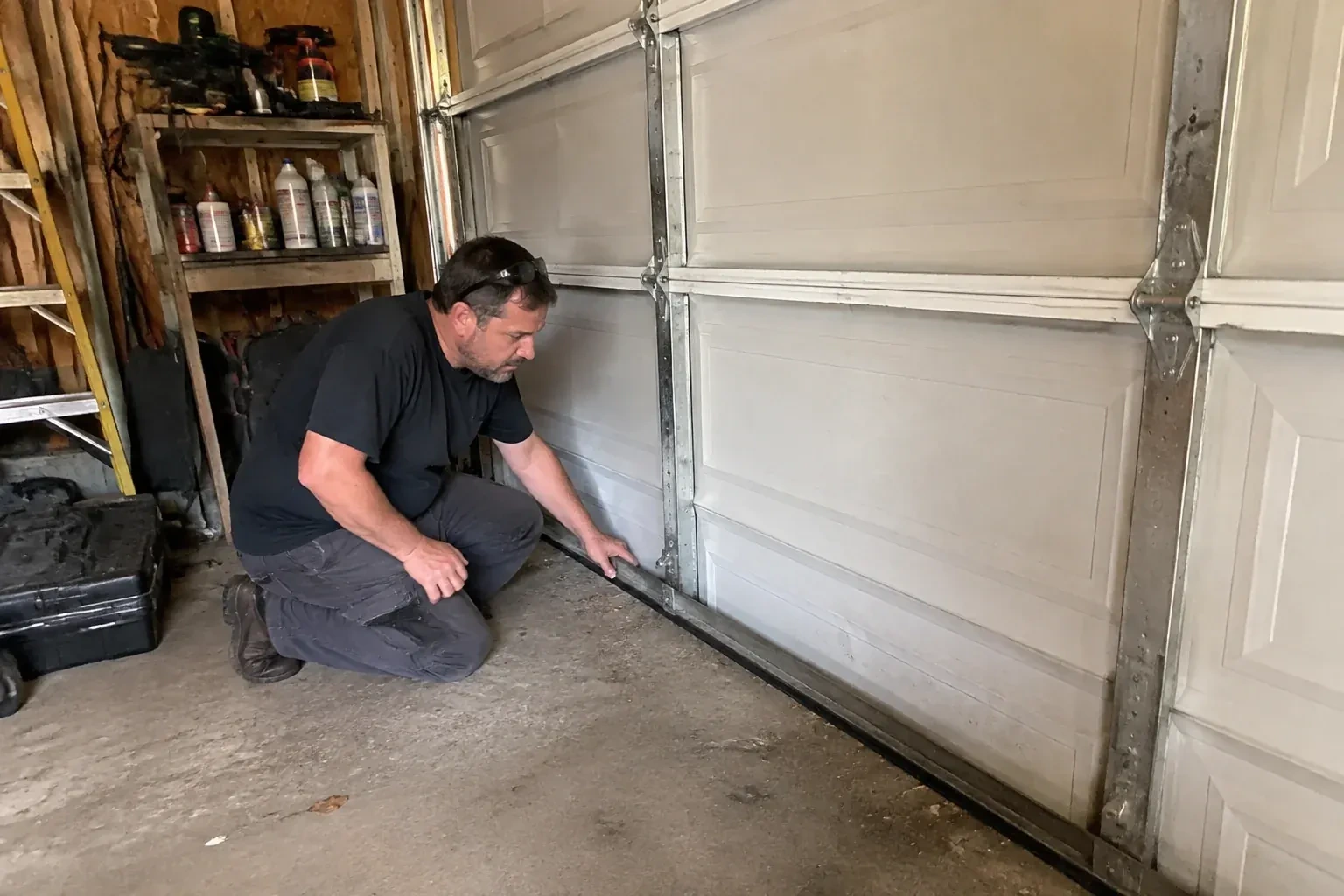
Cold stiffens the lubricant in the bearings and hinges and firms up the rubber seals, so the door drags a little more and the springs have slightly more to overcome. A bottom seal frozen to the slab adds to it, and this usually eases as temperatures rise. A door that stays heavy is worth a prompt check regardless of season, since persistent drag can come from binding, an obstructed track, rollers, hinges or cables as well as the spring balance.
Two are standard. A piece of two-by-four is laid flat on the floor in the door's path and the door closed onto it; it must reverse and return to open. Then, as the door closes, an object is passed through the photo-eye beam near the floor, and again the door must reverse. Both depend on a balanced door, which is why they come after the adjustment rather than before.
Too much spring tension. The springs are pulling harder than the door weighs, so at rest they win and the door climbs. This often follows a spring replacement wound a turn too far, or a door that lost weight when heavy panels were swapped for lighter ones. Releasing a quarter turn or two, tested after each, brings it back to holding still.
OxfordOntario
Garage Door Balance Adjustment · Woodstock, East Zorra-Tavistock, Norwich, South-West Oxford, Zorra, Bradburn Subdivision, Perrys Lane, Burgessville
Every square is one home in a hundred.
On-site assessment
The door has grown heavy so gradually you stopped noticing, until a visitor tried to lift it and could not.
(226) 796-9195, open 24/7.
On-site assessment preferred · (226) 796-9195, open 24/7