Sound familiar?Norwich
- The call
- It is a February morning and the key goes only halfway into the garage handle. Yesterday's melt ran down the door face and into the keyway, and overnight it set like glass. The key flexes; the cylinder stays put.
It is a February morning and the key goes only halfway into the garage handle. Yesterday's melt ran down the door face and into the keyway, and overnight it set like glass.
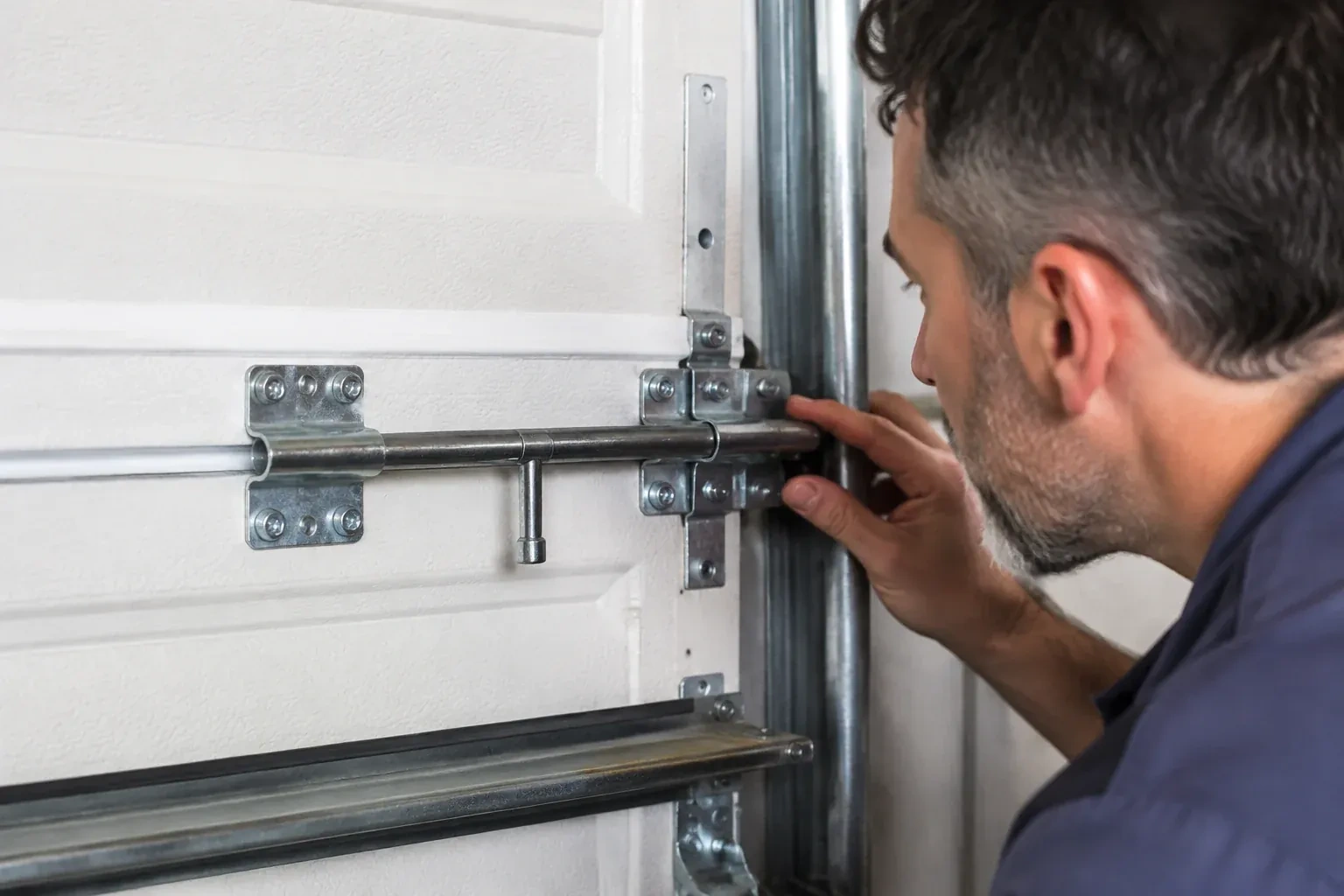
A manual lock earns its keep on the nights the power goes out. With the opener dead, the door comes down by hand on the release cord, and the slide bolt or T-handle is what holds it shut until morning. Winter tests these locks: meltwater freezes in the outside cylinder, salt spray stiffens the bars in their guides, and packed snow under the door lifts it just enough that the bolt misses its slot. Lock repair puts the mechanism right, treats the cylinder and bars so they shed moisture, and leaves you with a simple routine for outage nights.
Sound familiar?Norwich
Garage Door Manual Lock Repair · Norwich
Scene 1
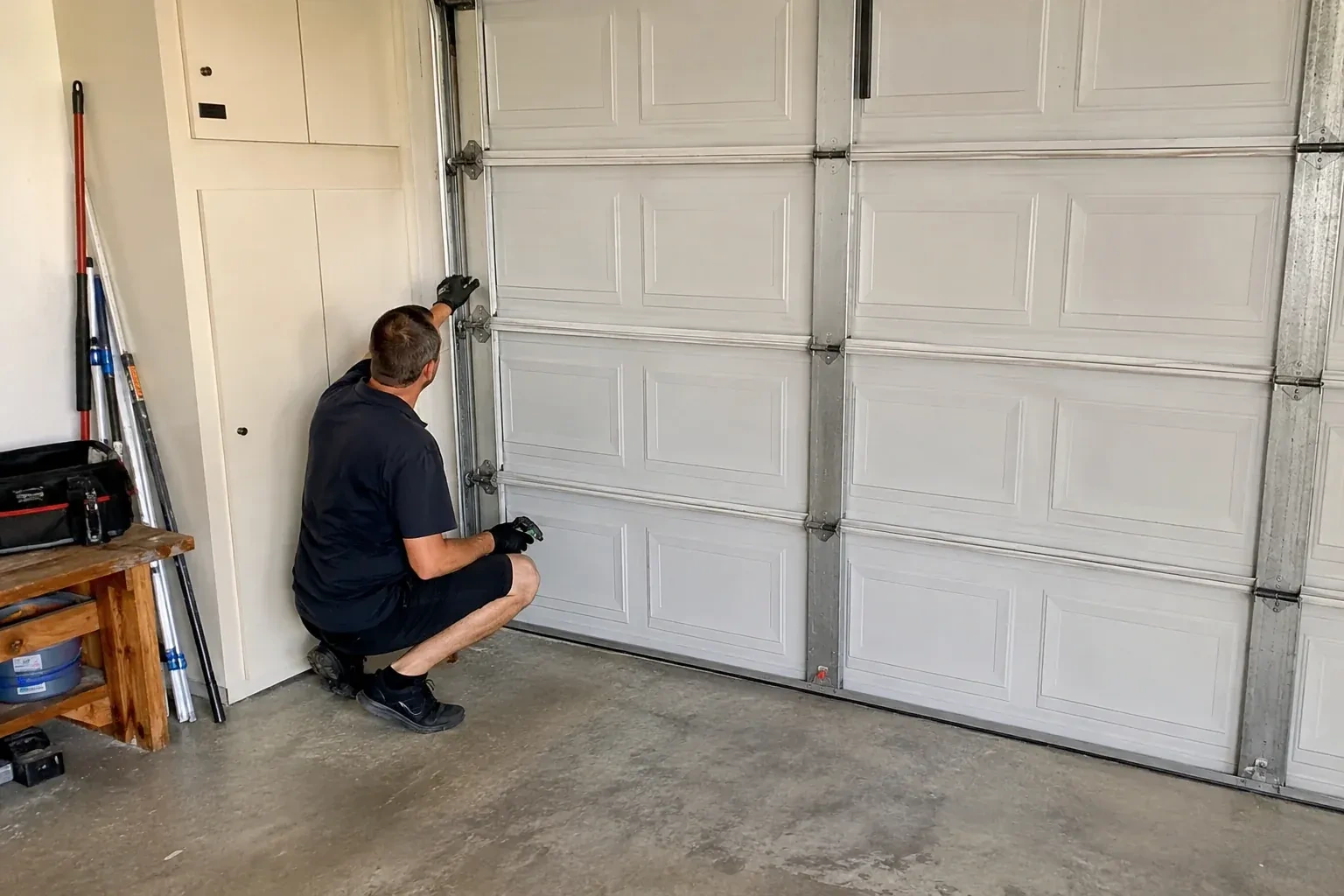
Before the lock is touched, the opener is disconnected and the door is lowered by hand until it rests on the floor. The technician checks that both bottom corners meet the concrete, that the top section sits flat against the header, and that the door is level across its width. Then the bar is sighted against its slot. If the two are out of step, the reason is looked for in the door: a settled slab, a loosened track bracket, a compressed bottom seal, snow or ice at the threshold, or an opener limit set to stop the door short. Sorting the door out first keeps a good lock from being replaced for a fault that lives elsewhere.
Scene 2
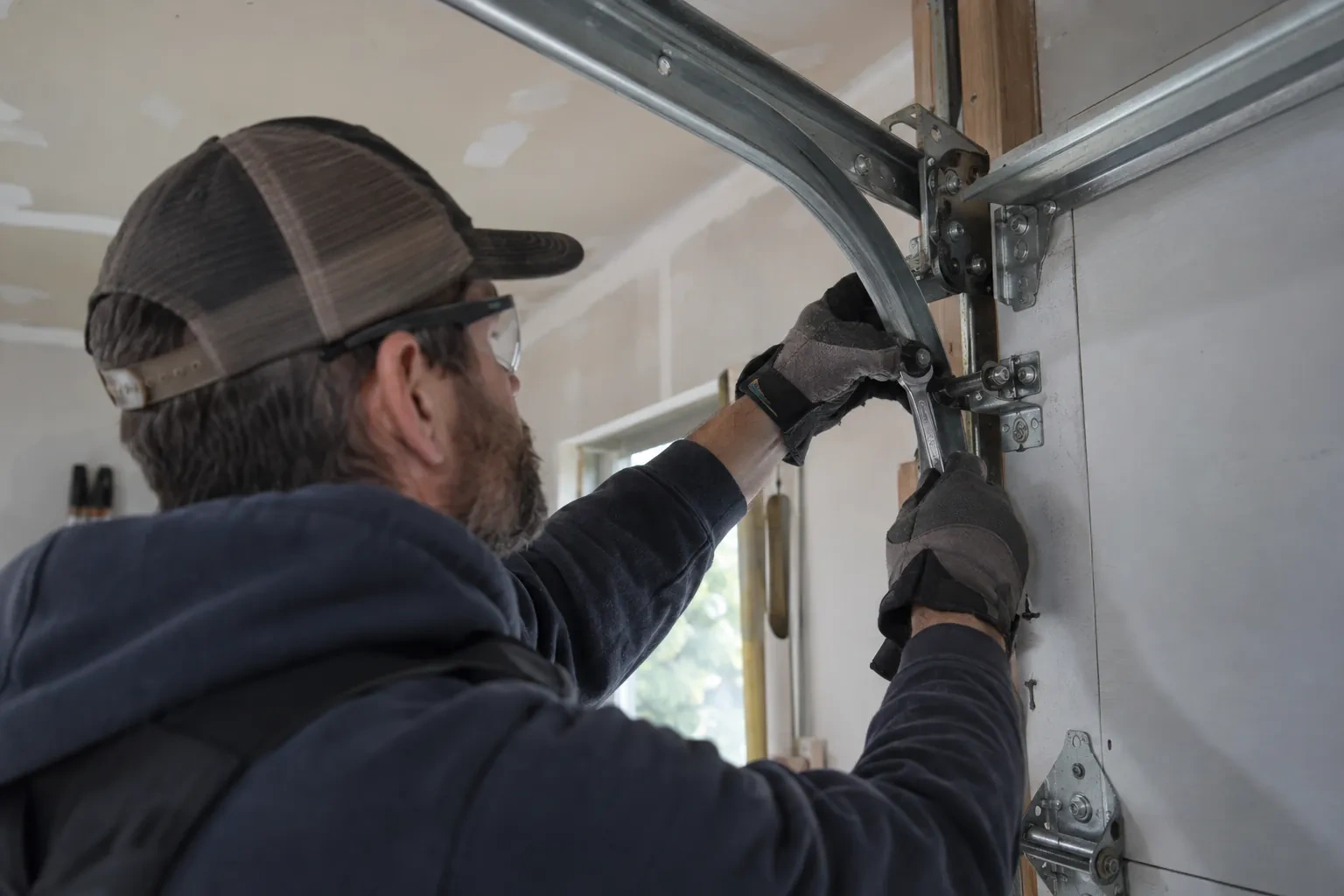
When door position is the cause, the fix goes to the door, not the lock. Track brackets that have loosened are tightened so the vertical track sits plumb and at the correct distance from the door. If the opener's down limit stops the door a little high, the limit is reset so the door rests on the floor. Bar guides are then repositioned or shimmed so each bar meets the centre of its slot with the door shut, and the slot is dressed with a file if a burr has formed. Only where a slot is genuinely in the wrong place is a new one punched, with the old one left clean.
Scene 3
The outside cylinder sits on a cold steel face where meltwater runs, so it gets a dry graphite or PTFE lubricant rather than oil, which would trap moisture and grit. A puff at the start of the cold season and another after the first thaw keeps the pins moving. A small tube of lock de-icer in the car is the answer to a keyway that has frozen; hot water is never poured on it. The bars and their guides, which live where salt spray collects, take a light silicone film in late autumn. Keep the threshold clear of packed snow so the door closes to its full depth and the bolt still finds its slot.
What shapes the quoteOxford Garage Door Services
FeesSame any hour
Yes. An inside slide bolt is the simplest addition: it fixes to the door's edge stile and a slot is punched in the track to receive it. A keyed T-handle can also be added, with a cutout in the centre of a section, a centre mechanism and bars run to both tracks. Where an opener is fitted, the new lock is set up so the two are coordinated from day one.
Because the door is not resting where it rested when the lock was fitted. A heaved or settled slab, a loosened track bracket, a flattened bottom seal, packed snow at the threshold or an opener limit set a little high all move the door a few millimetres, and a few millimetres is all it takes. The technician corrects the door's closed position or resets the guide so the bar finds its slot again.
Because the opener is strong enough to lift a door heavier than a person, and it has no way of knowing a bar is in the track. It pulls, the bar bends, the lock body tears at its screws, the section can crease and the opener's gear or trolley takes the shock. Opener makers ask for manual locks to be disabled or removed when a motor is installed for exactly this reason.
OxfordOntario
Garage Door Manual Lock Repair · Woodstock, East Zorra-Tavistock, Ingersoll, South-West Oxford, Zorra, Bradburn Subdivision, Perrys Lane, Burgessville
Every square is one home in a hundred.
On-site assessment
It is a February morning and the key goes only halfway into the garage handle.
(226) 796-9195, open 24/7.
On-site assessment preferred · (226) 796-9195, open 24/7